Fitting a Western Saddle to a Rider
Fitting a western saddle to a rider is about your seat, legs, and balance—while also keeping the horse’s back in mind. Here’s a practical guide to get you started, plus tips you can use in a store or with a…

Western style saddles
Fitting a western saddle to a rider is about your seat, legs, and balance—while also keeping the horse’s back in mind. Here’s a practical guide to get you started, plus tips you can use in a store or with a…
Buying a Used Saddle, a Comprehensive Guide Practical Advice for Horse Owners, Saddle Buyers, and Equestrian Enthusiasts Introduction Buying a used saddle can be a smart and economical choice for horse owners and riders. With the right approach, you can…
Yesterday I pretty much wrapped up the final assembly of this Will James Ranch Roper. The stirrup leathers are in place, concha’s and saddle strings with bleeder knots tied, and flank billets tooled oiled and laced in place, and stirrup…
Real sheepskin or synthetic? Both real sheepskin and synthetic fleece can both work for lining western saddle skirts. The best choice depends on climate, maintenance willingness, budget, and how much you value cushioning versus ease of care. Pros and cons…
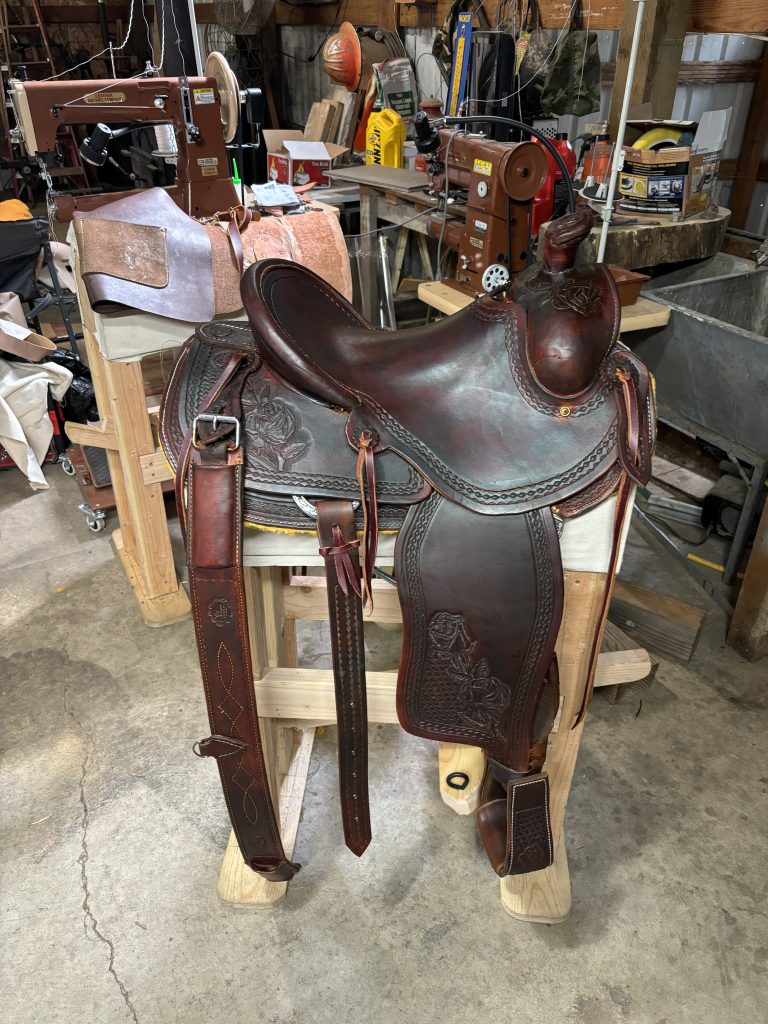
Fitting a western saddle involves multiple factors which must work together for both the horse and rider for comfort, safety, and performance. Horse Fit Factors Gullet Width and Clearance: The gullet must be 2-3 fingers away from the horse’s withers…
The main differences between a custom Western saddle and a factory-built Western saddle revolve around craftsmanship, personalization, and production process. In summary, custom saddles offer a tailored fit and unique features suited to your personal style and needs, while factory-built…
Comprehensive Saddle Clean, Wash, and Condition Process The Importance of Saddle Care A well-maintained saddle is essential for both the horse’s comfort and the rider’s safety. Over time, sweat, dirt, and weather can take a toll on leather and hardware,…